2026 Outstanding Earth Science Teacher Award Winners
Jump to: Section Winners | State Winners
Outstanding Earth Science Teacher (OEST) awards are given for "exceptional contributions to the stimulation of interest in the Earth Sciences at the pre-college level." Any teacher or other K-12 educator who covers a significant amount of earth science content with their students is eligible. Eight national finalists are selected, one from each NAGT regional section. Some sections also recognize state or province winners. Individuals may apply themselves or nominate a colleague for the award.
Section Winners
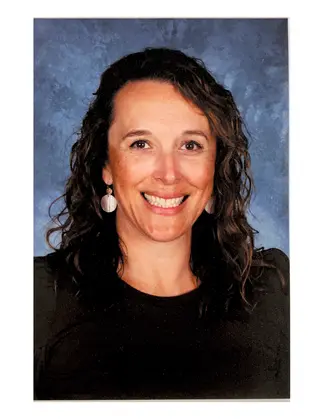
Courtney Deming - Eastern Section, New York
Courtney Deming earned her master's degree in geology from the University at Buffalo and began her career working under the New York State Geologist. In that position she had many opportunities to educate the public which started her transition into education, eventually culminating in teaching certification from The College of Saint Rose. She started her career in 2006 at Schalmont Middle School and currently teaches Physical Science and Regents Earth and Space Science there. Courtney is a current member of the Master Teacher program for New York State.
Courtney is passionate about creating equitable, inclusive, and engaging science learning environments, where students feel capable of exploring their natural curiosity of the world and how it works. Courtney believes all students deserve access to high-quality science instruction and the confidence to see themselves as capable participants in addressing the scientific challenges facing society. Drawing on her background and experience, Courtney works to create authentic learning experiences for her students. These include field trips with local scientists, phenomenon based learning and makerspace-style engineering challenges using recycled materials.
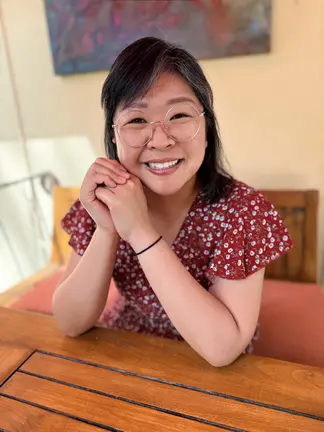
Stephanie Ho - Far Western Section, California
Stephanie Ho brings over a decade of experience in science education to her roles as a sixth and eighth-grade science teacher and a co-facilitator of the APISA student affinity group at Mirman School. Her professional background spans ocean microbiology, hydrological studies, and remote sensing, alongside several years of educational outreach and penguin husbandry at the Aquarium of the Pacific. A firm believer that science and creativity are deeply connected, she finds inspiration through the creativity and chemistry of baking, cooking, and painting with watercolors. Outside the classroom, she is a dedicated family person who loves being outdoors and finds true joy in the simple connections made while sharing a meal and any free time with her family and friends.
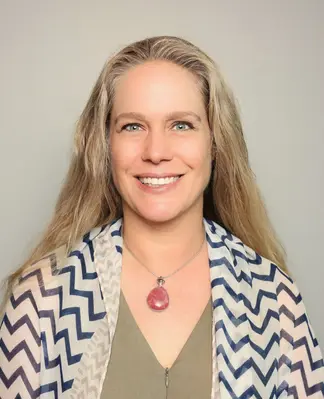
Vida Cantieri - North Central Section, Illinois
Vida Cantieri is the 2026 recipient of the Outstanding Earth Science Teaching Award for Illinois and the North Central Section. With nearly two decades of experience in Chicago Public Schools, she currently teaches middle school math and science at Norwood Park Elementary School. Vida holds a B.S. in Anthropology and Geology from DePaul University and an M.A. in Teaching from National Louis University. Her teaching philosophy centers on clarity, curiosity, and student empowerment. She fosters student leadership and ensures that each student feels essential by regularly taking on the role of facilitator and allowing students to lead lessons and designing peer workshops. Vida is known for inventive, hands-on teaching, including designing stratigraphic mini-excavation mystery boxes using Tupperware environments and index fossils to teach the Law of Superposition.
A lifelong learner, Vida serves on the educator advisory committee for the Adler Planetarium and previously for the Shedd Aquarium, Chicago Architecture Center, and Chicago's Museum of Contemporary Art. Her practice is further enriched by her roles as a National Ford's Theatre Oratory Fellow and a Trout in the Classroom educator. Her previous honors include the 2023 Henry Ford Teacher Innovator Grand Prize recipient, 2022 Bob Thompson Excellence in Energy Award Winner and the 2019 Lester Crown Distinguished Teacher Award.
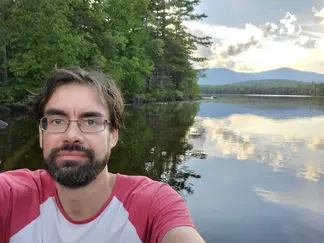
Bernardo de Castro - Northeastern Section
Bernardo de Castro is a dedicated science educator whose career reflects a deep commitment to inquiry, innovation, and student-centered learning. Born in Rio de Janeiro, Brazil, Bernardo brings a global perspective to his teaching, enriching his classroom with diverse experiences and cultural awareness. He emigrated to the United States in 1999, carrying with him a passion for education and a strong belief in the power of science to inspire curiosity and critical thinking in young learners.
Bernardo began his teaching career in Connecticut in September 2003, where he quickly established himself as a dynamic and reflective educator. From the outset, he embraced hands-on, inquiry-based approaches that encourage students to explore, question, and make meaning of the natural world. His teaching philosophy centers on the idea that students learn best when they are actively engaged in authentic scientific practices, and he continuously refines his instruction to meet the evolving needs of his students.
A hallmark of Bernardo's work is his commitment to experiential learning. In 2009, he founded a school vegetable garden, transforming an outdoor space into a vibrant, living classroom. This initiative has grown into a cornerstone of his program, allowing students to investigate ecological systems, sustainability, and environmental stewardship through direct experience. The garden not only supports science learning but also fosters collaboration, responsibility, and a deeper connection to the environment.
Throughout his career, Bernardo has demonstrated leadership both within and beyond his classroom. He mentors new and preservice teachers, collaborates with colleagues to strengthen science instruction, and actively seeks out professional learning opportunities to enhance his practice. His willingness to adopt new strategies, integrate technology, and build community partnerships reflects a forward-thinking approach that benefits both students and fellow educators.
Above all, Bernardo is known for the meaningful relationships he builds with his students and the lasting impact of his teaching. His classroom is a place where students feel valued, challenged, and inspired to pursue their curiosity. Years after leaving his class, many students remain connected to him, a testament to the powerful and enduring influence of his work as an educator.
Misti Newby - Pacific Northwest Section, Idaho
Misti Newby is an elementary STEM and junior high science teacher in Grace, Idaho, with over 20 years of experience in science education. She earned her Master's degree in Natural Science from the University of Wyoming and has taught across grade levels, from elementary integrated science to 8th-grade Earth Science and 7th-grade Life Science. In 2023, she was honored as the Idaho STEM Teacher of the Year.
Misti's teaching is grounded in place-based, problem-guided learning. Her signature instructional routine, "Bringing It Home," connects Earth science concepts to local landscapes in southeastern Idaho, helping students see science in the places they live, work, and explore. She regularly incorporates hands-on, inquiry-driven experiences, including field studies, AR sand tables, and community-based investigations.
Beyond the classroom, Misti coaches girls' wrestling and serves on the board of the Get Outside and Live (GOAL) nonprofit, promoting outdoor education and wellness. She also leads an annual community star party and collaborates with scientists and organizations to bring authentic STEM experiences to her students. Her work reflects a deep commitment to fostering curiosity, resilience, and environmental stewardship in the next generation.
Mary E. Slack - Rocky Mountain Section
Mary Slack is a dedicated science educator whose career reflects excellence in teaching, innovation, and leadership. Her commitment to student-centered, inquiry-based teaching is grounded in the belief that all students can learn through meaningful engagement, real-world application, and rigorous exploration of scientific concepts. Mary holds a Masters of Science in Science Education from Montana State University, as well as dual Bachelor of Science degrees in Secondary Education and Fisheries and Wildlife Biology from the University of North Dakota.
With over three decades of teaching in Illinois, Montana, and Colorado, Mary's teaching is structured around driving questions that challenge students to apply their knowledge to authentic problems. By designing earthquake resistant structures, building solar cars, conducting field-based water quality testing, and simulating asteroid and wildfire impacts, her students' learning mirrors real scientific work. Through integrating cutting-edge-technology, her students have participated in once-in-a-lifetime virtual collaborations with scientists at the McMurdo Research Station in Antarctica and with NASA astronauts on the International Space Station.
As a reflective educator, Mary relies on student data to guide instruction and has dramatically improved student learning outcomes. Her instructional strategies emphasize collaboration, high expectations, and growth while supporting diverse learners through differentiated instruction. Her successes have led to opportunities to present at state and national conferences.
Mary has impacted science education beyond her classroom, by securing numerous grants, organizing district wide events, such as K-12 Astronomy Days, and hosting many guest speakers. Within her community, she spear-headed local environmental programs for all ages. Mary has also taught at the university level as an adjunct instructor, technology consultant, and staff development advisor.
Throughout her career, Mary's leadership, creativity, and dedication to excellence has made her a model science educator. Mary Slack not only teaches Earth Science–she inspires the next generation of scientists, problem-solvers, and informed global citizens.
Dustin Perez - South Central Section
Dustin Perez is a fifth-grade science teacher at Robert L. Crippen Elementary in Porter, Texas. A strong advocate for hands-on learning, he founded Science Discovery Nights, a monthly after-school program that connects science professionals with the community. He brings hands-on science experiences to students both in the classroom and through this program, regularly inviting earth scientists, including geologists from the Bureau of Economic Geology and educators from the Houston Geological Society's Bones in Schools program, to lead engaging, family-friendly activities that allow students and their families to explore science together.
He also founded and volunteers to lead three after-school science clubs, serves as his campus UIL coordinator, leads his campus Science Committee, coaches gaga ball, teaches at his district STEM camp, and serves on his district's Science Academic Leadership Team, where he helps develop curriculum and train teachers. In addition, Dustin is a Take Care of Texas ambassador, a volunteer water monitor for the Texas Stream Team, and a member of NASA's Space Exploration Educator Crew. He also develops Science STAAR questions for Pearson, writes for Edutopia.org, and serves as Chair of Science Education for the Texas Academy of Science. He holds a Master of Education from the University of Houston–Victoria, where he was honored as the Outstanding Graduate Student of his graduating class, and he recently earned an Environmental Education Certificate from the Texas Environmental Education Advisory Committee through the Texas Education Agency. At home, Dustin is a devoted husband and proud father of two young boys who attend the same school where he teaches. As a family, they enjoy spending time outdoors, attending church, and hope to one day visit every Texas State Park.
Jeanne Lee Miller - Southeastern Section
Awardee did not provide their professional biographical information.
State/Province Winners
Keith Berry - Colorado
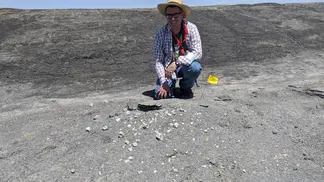
Keith Berry is a junior/senior high school teacher in the K-12 Hoehne School District in rural southeastern Colorado, where he has taught for nearly 20 years. He is a 2026 Quantime Winner for the Colorado Department of Education for introducing quantum science and technology through the earth science curriculum. He has a Bachelor's in Science and a Master's in Science Education degrees from the University of Northern Colorado in Greeley. He is passionate about researching and integrating local and regional geology into his curriculum. He is currently sponsoring an afterschool STEM program in collaboration with Qollider (Colorado Aerospace) that introduces elementary students to STEM, including quantum science and technology. He is actively researching ways to integrate quantum computing techniques, such as by having students construct foundational, laser and polaroid filter-based quantum neural networks and simulated quantum circuits, into his earth science curriculum, such as in modeling Milankovitch depositional cycles at the global stratotype section and point for the base of the Turonian (Late Cretaceous) at Pueblo in rural southeastern Colorado. His philosophy is that earth science should be accessible to everyone as we prepare for the challenges of tomorrow, particularly knowledge about groundwater resources.
Justin Fairchild - Kansas
Justin Fairchild is in his 8th year as a teacher and currently teaches Earth & Space Science, Chemistry, Ecology & Environmental Science at Lawrence High School. Justin earned a B.S. in Geology and Geophysics from the University of Wisconsin, an M.S. in Geology from the University of Kansas, and, as a Woodrow Wilson Teaching Fellow, a Masters in Teaching from Columbus State University. Justin uses inquiry-based lab activities to draw students into sciences and utilizes the proximity and connections with KU researchers to facilitate local fieldtrips and show students science in action. In collaboration with KU scientists, Justin mentors students through scientific research projects in both astronomy and geology. His students have presented their research at University of Kansas mini-symposiums, Kansas Academy of Sciences Annual Meetings, and a regional Geological Society of America conference. Justin's highest priority as an educator is to be kind and create a classroom environment in which students feel safe and welcomed.
Tess Ingebrigtsen - Minnesota

Tess Ingebrigtsen is a middle school science educator at Saint Thomas Academy in Mendota Heights, Minnesota. She possesses five years of teaching experience, all within the middle school setting. Ms. Ingebrigtsen earned a Bachelor of Science degree from Winona State University, with a major in Biology: Life Science Teaching and minors in Middle Level Science and Coaching. Subsequently, she completed a Master of Science degree in Natural Science and Environmental Education from Hamline University last year. Mrs. Ingebrigtsen emphasizes hands-on activities and fosters student curiosity to facilitate immersion in scientific phenomena. The unique demographic of her students, an all-boys environment, presents a distinct challenge that motivates her continuous professional development and the exploration of novel instructional approaches. Outside of her professional duties, Ms. Ingebrigtsen is passionate about native landscaping and local ecology, engaging in activities such as hiking and spending time outdoors with her family. This connection to nature informs her classroom instruction and generates opportunities for authentic, real-world learning.
Vryann James Sison - Montana
Vryann James Sison is a STEM educator with six years of teaching experience across secondary and post‑secondary settings in both the Philippines and the United States. He currently teaches various STEM courses at a rural, American Indian‑serving high school in Hardin, Montana. Sison earned a Bachelor of Secondary Education in Biological Science from Dr. Yanga's Colleges Inc., Philippines, and is completing a Master of Education in STEM Education through the American College of Education in Indiana, USA. His academic preparation across international contexts informs his commitment to equitable, research‑based, and culturally responsive STEM instruction.
Sison's teaching philosophy emphasizes inquiry‑driven learning, scientific literacy, and the use of real‑world phenomena to engage diverse learners. He integrates phenomenon‑based instruction, scaffolded supports, and digital tools to promote accessibility and deepen conceptual understanding, particularly for students in foundational and intervention‑based STEM pathways. His instructional approach prioritizes student agency, relevance, and the development of problem‑solving skills.
Beyond the classroom, Sison coaches students in Science Olympiad and the NASA ROADS Challenge—experiences that strengthen his focus on authentic application of scientific and engineering practices. He also collaborates with educators through workshops centered on NGSS‑aligned pedagogy and inclusive STEM teaching. His work reflects a sustained dedication to advancing rigorous, meaningful, and community‑anchored STEM education.
Emily K Rose Seifferlein - Nebraska
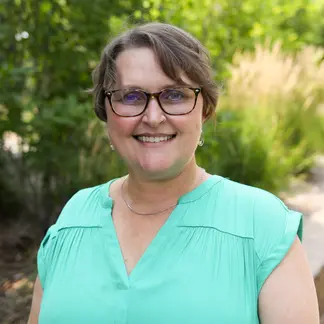
Emily Rose Seifferlein has been a high school science teacher in Lincoln Public Schools (LPS), Lincoln, NE for 21 years. She currently teaches chemistry, physics, earth science and research courses at LPS Science Focus Program (SFP). She earned her Bachelor of Science in Geology from Central Michigan University, her Master of Science in Teaching (Earth Science) at Wright State University, and earned post baccalaureate teaching certification from University of Nebraska Lincoln. Emily's master research focused on ancient shallow-water carbonate systems of the Bahamas. While analyzing thin sections from near-shore environments, Emily realized that research experiences were attainable for others. She utilized that experience in cementing her decision to teach high school and in formulating her personal teaching philosophy. Emily's premise is that all students are capable of doing real science. Emily not only teaches traditional science courses at SFP but also played an integral role in developing the SFP 9-12 research program. Emily's early belief that all students can do science informs her teaching practice at SFP. Each year, she manages 15-20 separate long-term student research projects presented at regional, state and national levels. Emily is most proud of supporting her students in asking their own questions, implementing their procedures to collect and analyze data and in how they prepare posters and papers to communicate their findings.
Jason Plawa - Pennsylvania
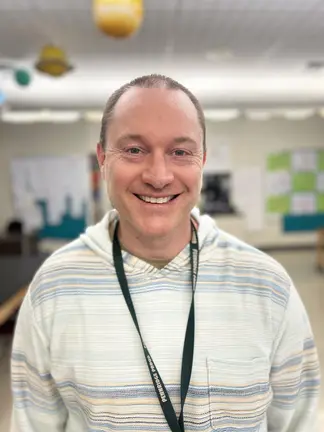
Jason Plawa is a high school science teacher at Pennridge High School in Perkasie, Pennsylvania. With over 22 years of experience, Jason has taught nearly every science discipline offered at the secondary level. He currently leads the Earth/Space and Astronomy/Geology programs, focusing on making complex global systems accessible to every student. Jason earned his Bachelor's in Education from Kutztown University and a Master of Science in Geosciences from Mississippi State University. This background allows him to translate technical data into practical, real-world applications. In the classroom, Jason excels at reaching students who may feel disconnected from the traditional school environment. Rather than relying on rigid lectures, he prioritizes building rapport and creating a space where science feels relevant, even to those who initially struggle with interest. He maintains an adaptable environment, shifting his methods to meet students where they are. By focusing on the "big picture," he helps them see how science impacts their daily lives and future opportunities. Outside the classroom, and in addition to being a husband and father of three, Jason serves as the Ski Advisor. He leads students to mountain ranges across the country, allowing them to experience the physical reality of the terrains they study in class.
Andrew W Johnson - South Dakota
Andrew Johnson is a sixth-grade science teacher at Belle Fourche Middle School in Belle Fourche, South Dakota, where he has spent the past eleven years fostering curiosity and a love of learning in his students. In his classroom, he strives to make science engaging, creative, and meaningful through hands-on experiments, real-world problem solving, and imaginative projects. Whether students are designing space rovers, piecing together evidence of plate tectonics, or debating about energy resources, his goal is to help them see themselves as capable scientists and critical thinkers. He has also helped establish a middle school robotics league, creating new opportunities for students to explore engineering and teamwork.
Andrew's passion for science extends beyond the classroom. During the summers, he has worked in college laboratories researching ways to encourage bacteria to metabolize persistent environmental contaminants, as well as at the Sanford Underground Research Facility, contributing to research connected to the search for dark matter. He was also honored to be selected as a K–12 ambassador to visit China's JinPing Underground Laboratory, an experience that broadened his global perspective on scientific collaboration.
He believes that strong relationships and a positive classroom environment are essential for student success. He works to create a space where all students feel supported, encouraged to ask questions, and confident in taking academic risks. His educational philosophy is that all students can learn in his classroom.
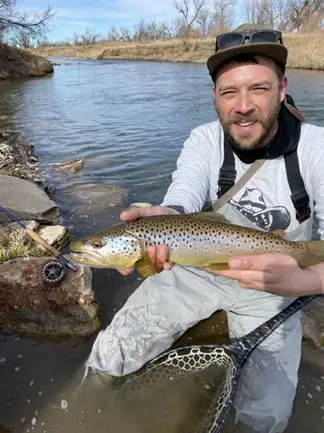
Outside of school, he spends much of his time outdoors in the beautiful Black Hills of South Dakota and work as a fly fishing guide, experiences that deepen his connection to the natural world and further enrich his classroom teaching.
Angela Garcia - Texas
Angela Garcia is an experienced educator with 21 years in the classroom and four years specializing as a Teacher of the Deaf. With advanced academic training and ongoing doctoral work, she combines Earth science expertise with a deep commitment to accessible, inquiry‑based learning for deaf and hard‑of‑hearing students.
Angela's teaching philosophy emphasizes hands‑on exploration, visual learning, and real-world scientific investigation. She designs Earth science experiences that help students understand their planet through phenomena-driven instruction—whether analyzing lunar topography, tracking comet motion, or engaging in soil and plant growth studies through challenges like the "Plant the Moon Challenge. Her approach integrates assistive technology, data collection tools, and authentic fieldwork to build strong scientific literacy and critical‑thinking skills.
Beyond the classroom, Angela's passion for stargazing, observatory work, and science outreach inspires her curriculum and connects students with genuine research opportunities. She believes that Earth science education should cultivate curiosity, environmental awareness, and a sense of connection to the wider universe.